Frequent questions
Questions and answers
Updated:
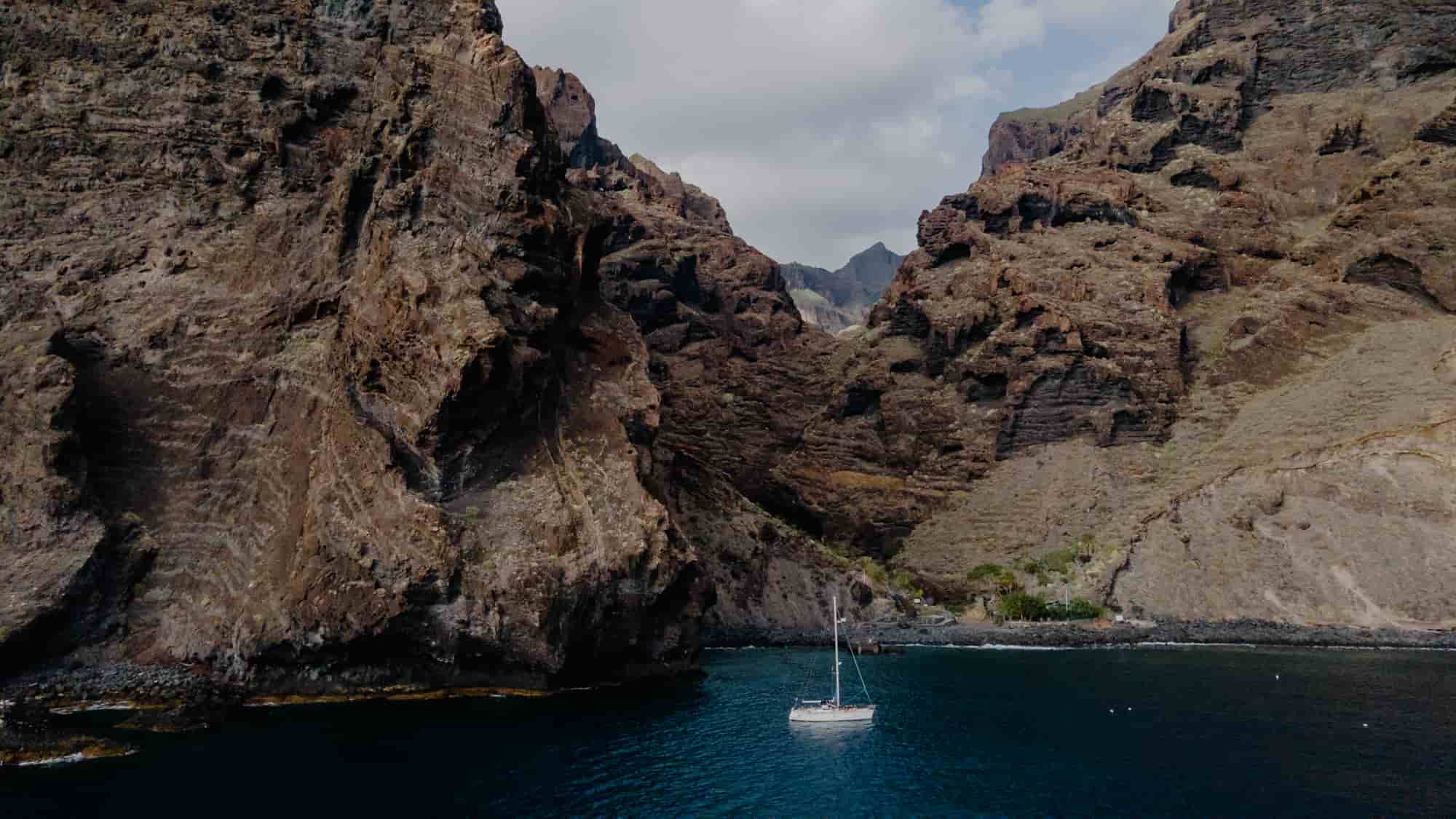
Picarus Sailing Club sails out of Los Gigantes marina (Santiago del Teide, Tenerife) across the Teno-Rasca Marine Strip, a Special Area of Conservation within the Natura 2000 network. These are sailboat trips with a maximum of 9 people on board, always with a skipper and a guide. We approach slowly and never chase the animals: the sea is not a stage and we never promise sightings. These are the questions we get asked most before boarding.
The boat and safety
-
What is the maximum capacity of the boat?
Our boat has a capacity of 9 people, including children and babies.
-
Shall we sail?
On our excursions we always take out the mainsail, but we do not sail only, since on shared excursions maneuvers under sail become impossible. If you are interested in sailing, ask us, we have a different activity for you!
-
Are we safe on board?
Our boat is fully equipped for your safety, we have vests on board for both adults and children, we also have a type C first aid kit, with everything you need in case of any accident. We also have Cardio protection equipment, our crew has received training in CPR and the use of the AED, in addition to having first aid courses. Your safety is our priority, you will have to follow the instructions given by the crew at all times.
-
Are there any kind of restrictions and conditions?
To comply with the quality and safety of our trips, we have prepared a document where you will find our terms and conditions, it is very important that you read it before hiring the tour.
The experience on board
-
What is the difference between the shared and the private trips?
On the shared trip (3 hours) you sail with other people in a small group, with a maximum of 9 passengers. On the private trips (3, 4 or 6 hours) the sailboat is reserved exclusively for you and your companions: the same experience, at your own pace and with more privacy.
-
Can children go on excursions?
Yes, children over 3 years old on the 3-hour shared excursion, and with no age restrictions on private tours.
-
Are we pet friendly?
To avoid misunderstandings and to find out how your pet behaves, you must contact us so that we can agree if it is suitable to make the trip. We generally accept small dogs (-5Kgs) that are on a harness and well behaved. At all times remember that it is your responsibility and you must be with him.
-
What kind of whales can be seen in Tenerife?
The pilot whale (Globicephala macrorhynchus) is the most numerous resident species in Tenerife. Depending on the season, we will be able to spot the tropical whale (Balaenoptera edeni), it is one of the species that frequently visits our waters from April to June, although it can be seen during other months of the year.
-
What kind of dolphins can be seen in Tenerife?
The bottlenose dolphin (Tursiops truncatus) is resident, making it the second most sighted species, the spotted dolphin (Stenella frontalis) and the common one can also be seen sporadically.
-
What type of menu and drinks do you offer on your excursions?
Our menu is mainly vegetarian, you can enjoy a substantial appetizer, in which you can taste, Spanish omelette, Canarian cheese with nuts, guacamole with nachos, tomato salad, Iberian sausages and seasonal fruit. We offer fresh drinks during the trip, Golden Beer, soft drinks (not white brands), white wine and water (the drink is limited, but we do not skimp)
If you have any food allergies, ask us and we will prepare an alternative menu for you.
Logistics and preparation
-
Do you offer transportation from the hotel?
We offer transportation from different areas of the island, it is not included in the base price of the excursion, depending on the areas where you request transportation, the price of the excursion will be increased, this will be subject to availability.
-
What are the recommendations for the tour?
Comfortable clothes, something warm, swimsuit, biodegradable sunscreen with high protection +50, towel, hat or cap, sunglasses and snorkeling equipment (if you don’t have one, don’t worry, we have on board). On the boat we will all be barefoot, so the best footwear option is flip-flops.
-
What can I do if I get dizzy?
If you usually get dizzy or have never sailed before, you can ask at any Pharmacy for “Caffeinated Biodramine”. It is recommended to take it an hour and a half before the trip. An empty stomach is a bit dangerous for motion sickness, so it’s better to have something to snack on before.
-
What is the meeting point?
📍 Puerto Deportivo Los Gigantes, pantalán 1, amarre 152.
Certifications
A guarantee of trust
Quality milestone · 2018
ISO 9001:2015
We were the first company in the sector to obtain the ISO 9001:2015 certificate for whale watching and crewed services for maritime excursions (AENOR, 2018).
Learn more →-
Certified destination
Whale Heritage Area Tenerife-La Gomera
The first destination in Europe certified for its responsible relationship with whales and dolphins: the marine strip we sail.
Learn more → -
Official emblem
“Barco Azul” (Blue Boat) flag
The Canary Islands Government emblem identifying vessels legally authorised for whale watching.
Learn more → -
State authorisation
AROC authorisation
The Spanish Government authorisation for recreational cetacean watching, with our sailboats on the official register.
Learn more → -
Member
ACEST — South Tenerife Cetacean Association
South Tenerife whale-watching companies united for cetacean conservation and the dignity of the activity.
Learn more → -
Member
World Cetacean Alliance
The world’s largest alliance for the protection of whales, dolphins and porpoises, with Picarus in its responsible-operator directory.
Learn more → -
Signatory company
Sustainability Charter for Whale Watching
The voluntary commitment of Tenerife’s whale-watching companies to cetaceans and the marine environment, driven by Turismo de Tenerife.
Learn more → -
Contributor
Calderones de Canarias
Citizen science: over 500 tropical pilot whales photo-identified in Canary waters with the help of the crews.
Learn more → -
Contributor
Tonina Association
Canarian biologists dedicated to marine research and outreach: cetaceans, turtles and sharks.
Learn more →



Come and visit us!
The map is served by Google Maps and only loads if you ask for it: once shown, Google may set its cookies.