What it is and what it looks like
Bryde’s whale is a baleen whale. Instead of teeth it has plates that let it filter the water and keep the small fish that make up its food. This is how the great whales eat.
Its body is slender and streamlined, very different from the sturdy sperm whale. It moves with elegance and tends to be discreet at the surface. That is why it is not always easy to see, even when it is close.
Unlike most rorquals, which travel between cold and warm waters, this one prefers to stay in temperate waters all year round. That makes it possible for it to appear around the Canary Islands.
When it may appear on our outings
It may show itself in the waters off south-west Tenerife, especially at certain times of year. It is not a fixed resident like the tropical pilot whale, but a more elusive presence.
Coming across one is one of those gifts the sea never promises. We never guarantee a sighting: the sea is not a stage and nature alone decides what it shows us each day.
If we meet one, we approach calmly and without chasing it, at under four knots as the rules require. The silence of sailing avoids noise that might unsettle it.
A serene presence
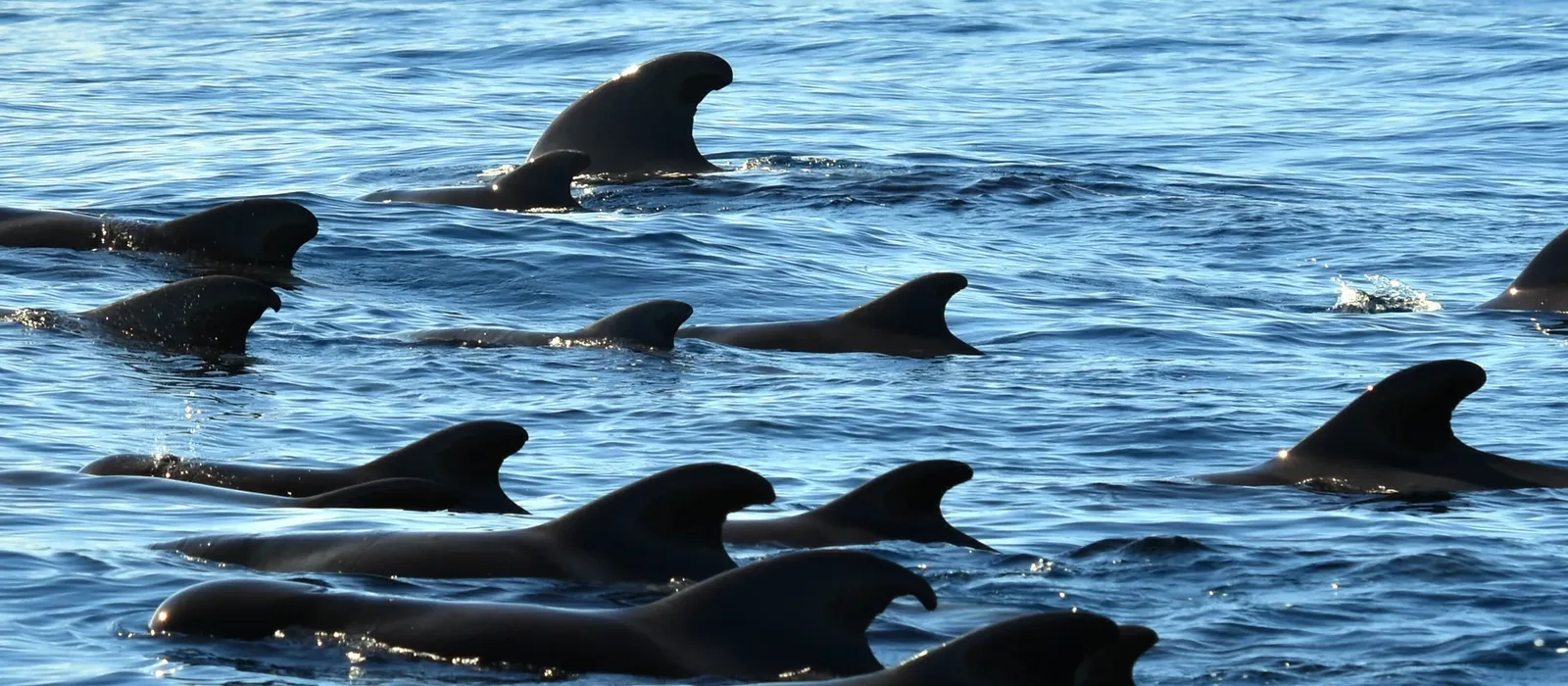
Seeing a rorqual is different from seeing a group of playful dolphins. Here, calm rules. The whale breathes, shows its back for an instant and slips under again without haste.
That unhurried rhythm invites you to watch in silence. There is no need to get closer or chase anything. It is enough to be there, to observe and to be grateful for the encounter. Keeping that distance is the best way to make sure these temperate waters remain a refuge for such discreet species. Each time one of them chooses to pass through here, it reminds us that the sea holds surprises, and that patience and respect are the only key to experiencing them.