What cetaceans are
Cetaceans are mammals that live in the sea. Although they spend their whole lives in the water, they are not fish. They breathe air through an opening on the top of the head, give birth to live young and nurse them, just as land mammals do.
They are highly adapted to the water. Their bodies are smooth and streamlined, and many move in groups. This group includes whales, dolphins and porpoises.
Two large families
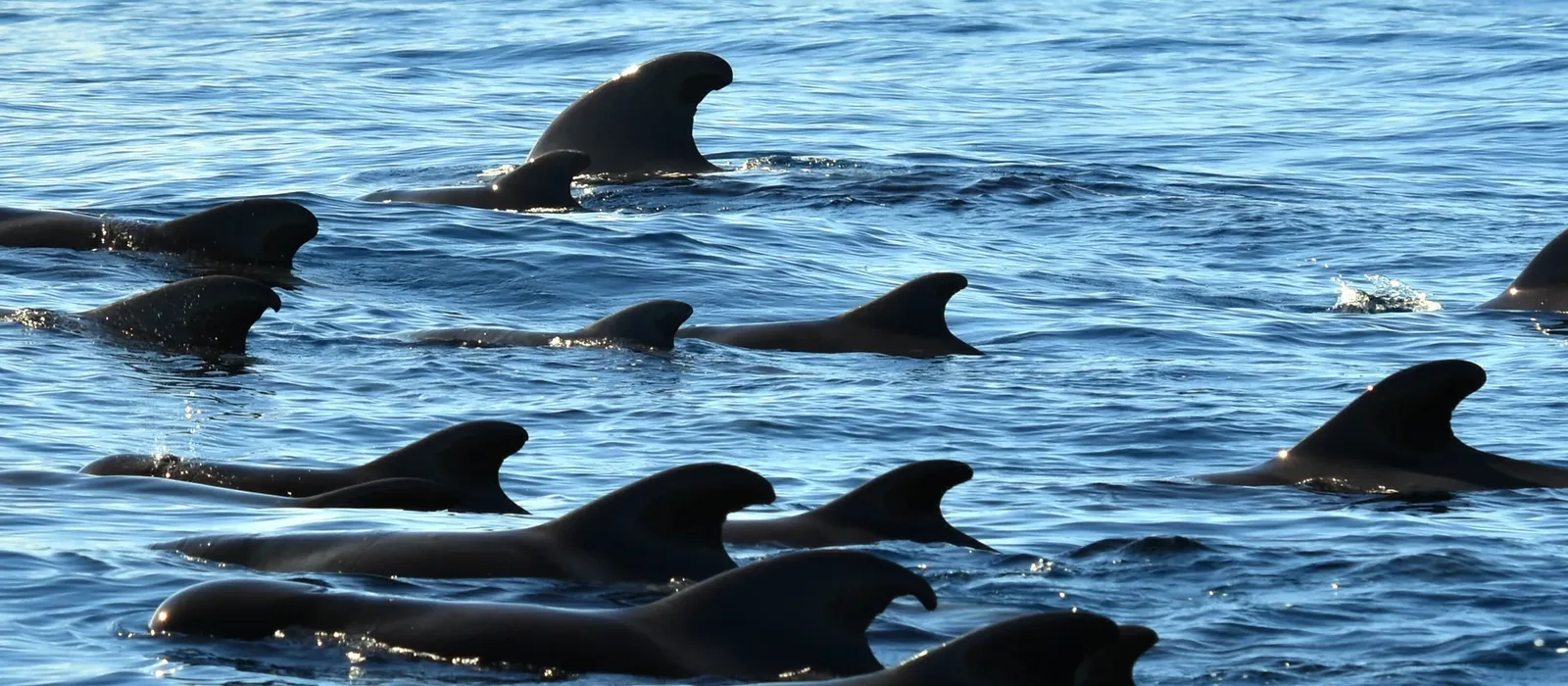
Cetaceans fall into two families. On one side are those with teeth, like the bottlenose dolphin, the tropical pilot whale or the sperm whale. They hunt prey such as fish and squid.
On the other side are those with baleen, plates that filter the water to keep the small food. This family includes the rorquals. They are two very different ways of living in the same ocean.
How we observe them on board
Several species live side by side in the Teno-Rasca Marine Strip. The tropical pilot whale and the bottlenose dolphin are regular residents; others, like the sperm whale or Bryde’s whale, are rare visitors. We never promise to see them: the sea is not a stage and nature alone decides.
When they appear, we approach slowly and without chasing, sailing at under four knots as the rules require. The silence of sailing lets them be the ones to come closer if they wish.
Observing cetaceans with respect is the basis of what we do. We do not seek a photo at any cost or disturb the animals. We seek to share their world for a while, without leaving a trace, so that these waters remain their home. Understanding what a cetacean is, how it breathes, how it raises its young and how it communicates, helps us look at it with more respect, and that respect is what turns an outing at sea into an experience remembered long after returning to port.