Where the word comes from
The knot measures how fast a boat is moving. One knot equals one nautical mile per hour, a little less than two kilometres per hour.
The name is no accident. Centuries ago, sailors measured speed with a rope that had knots tied at equal intervals. They threw the rope into the water and counted how many knots ran out in a fixed time. The more knots that passed, the faster the boat was going. That is where the word stayed.
The pace at which we sail
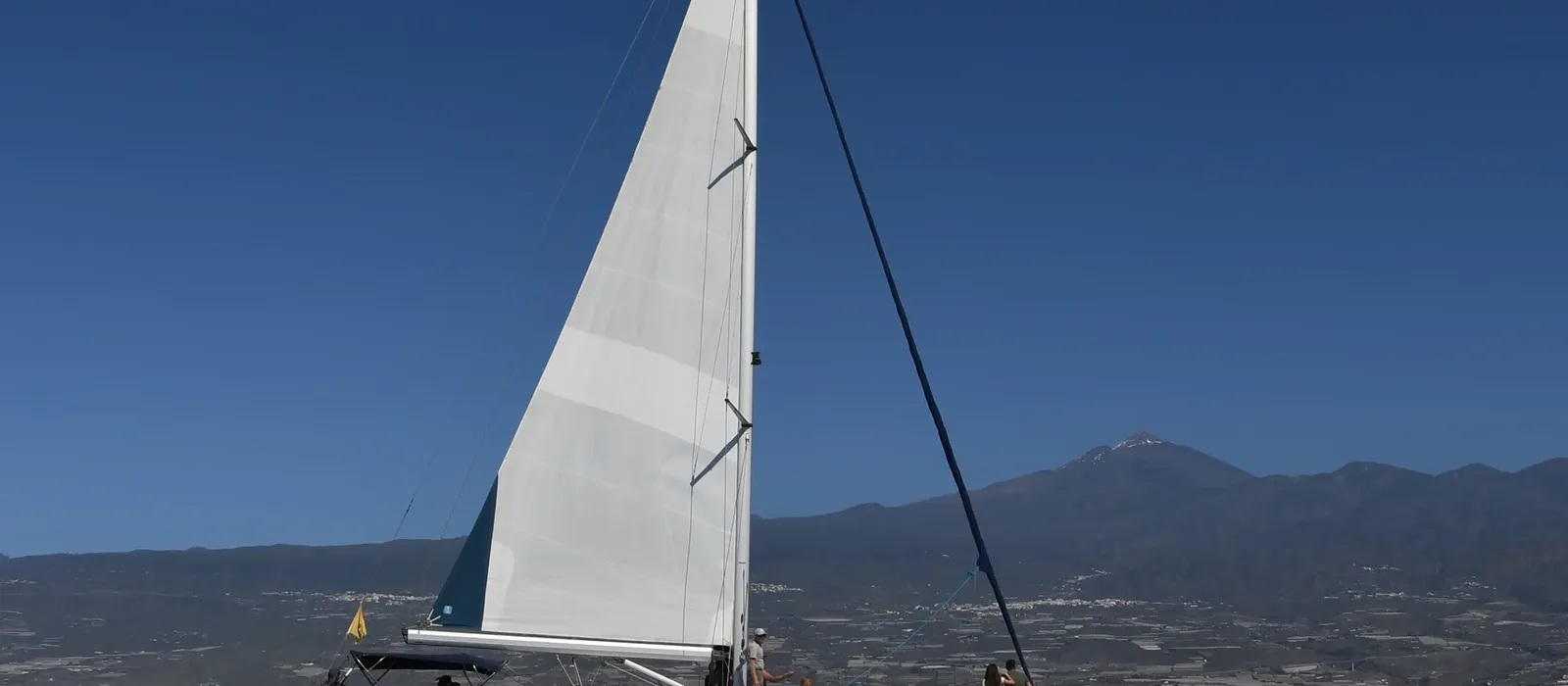
On our outings we almost never try to go fast. The yacht is not a vehicle for reaching somewhere sooner. It is the place from which we watch the sea in calm.
When animals are near, we slow right down. Spanish cetacean-protection rules require approaching at under four knots. That very gentle speed avoids disturbing the wildlife and respects its space.
For us it is not just a rule. It is the way we understand the sea. We go slowly because silence and slowness are what let a dolphin or a turtle come closer of its own accord. We chase no one.
Something to help you picture it
Four knots is about seven kilometres per hour. That is roughly the pace of a person walking briskly down the street.
Think about that the next time you are on board. When the skipper eases off near a group of cetaceans, the boat moves as slowly as you would walk. This way the encounter happens without noise and without haste, which is how it should be. The sea is not a stage, and these animals do not perform for anyone: we simply give them space to carry on with their lives.