Marine wildlife

Bottlenose dolphin

What is Bottlenose dolphin?

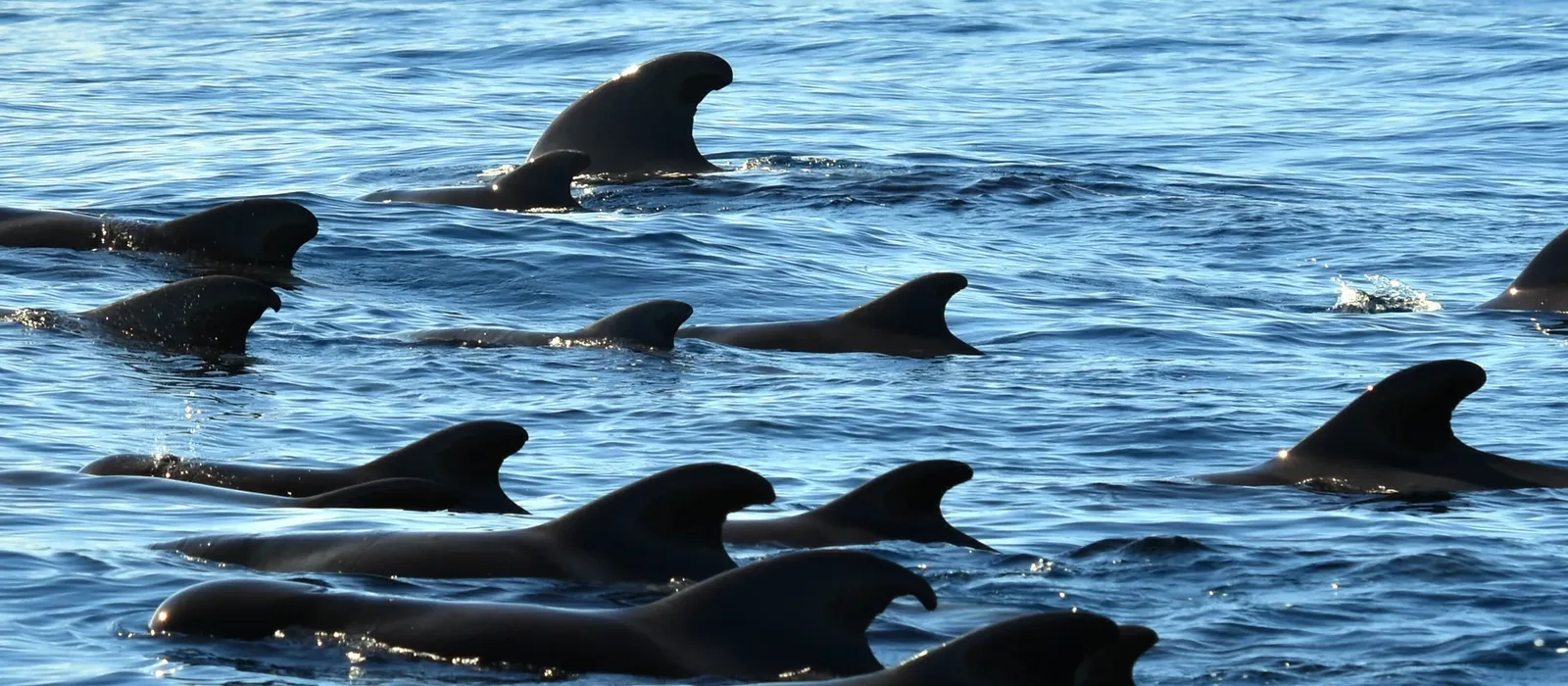
The best-known dolphin: large, sturdy and grey, with a short, broad snout. It is a regular resident of the Teno-Rasca Marine Strip and loves to play by the bow, riding the boat’s wave. Together with the tropical pilot whale, it is the species that appears most often on our outings.

Category
Marine wildlife
Also known as
Common bottlenose dolphin
Reviewed by
Félix · Deep-sea Skipper of the Merchant Navy and Cetacean Guide (Government of the Canary Islands) See their profile in the team
Last reviewed

What it is like and how it behaves

The bottlenose dolphin is the dolphin almost everyone pictures. It is large and sturdy, grey in colour, with a short, broad snout. Its curved mouth gives it that look of always smiling.

It is a highly social and intelligent animal. It lives in groups, communicates with whistles and hunts as a team. It feeds on fish and squid. It is often curious and lively, and it likes to come close to boats.

Where you experience it on board

It is a regular resident of the Teno-Rasca Marine Strip. Together with the tropical pilot whale, it is the species that appears most often on our outings. Even so, we never promise a sighting: the sea is not a stage and nature alone decides.

When it appears, it often takes up position by the bow. It rides the wave the sailboat forms as it moves and lets itself be carried along, leaping and turning. It is one of those moments that stays with you.

We approach slowly, without chasing, sailing at under four knots near the cetaceans. The silence of sailing helps the dolphin itself decide to come closer. We never go after them: we let it happen.

Respect comes first

Although its closeness invites it, swimming with dolphins is prohibited by regulation, and we always comply. The swimming and snorkelling on the outing take place in sheltered anchorages by the coast, not with the cetaceans.

Keeping our distance does not take the magic out of the encounter: it adds to it. Watching a calm dolphin, under no pressure, is the best way to enjoy it and to make sure it keeps choosing these waters to live in. That respect is at the heart of how we understand the sea. For us, the sea is not a stage set up for visitors, but the home of these animals, and stepping in gently is the only fair way to enter it.

Learn more →

Frequently asked questions

  • ¿Por qué los delfines nadan junto a la proa del barco?

    They ride the wave the hull forms as it moves, letting themselves be pushed along with almost no effort. It looks like play, and often it is: they swim, leap and turn beside the bow.

  • ¿Se puede nadar con los delfines en la salida?

    No. Swimming with cetaceans is prohibited by regulation, and we respect that. Swimming and snorkelling take place in sheltered anchorages by the coast, never with the animals.

Recent sightings from our boats

They are published one day later and without coordinates: we share what the sea gives us without pointing at where the animals are.

Want to live it on board?

Sail with us through the Teno-Rasca Marine Strip in small groups, aboard our sailboats.

Discover the experience

Certifications

A guarantee of trust

Quality milestone · 2018

ISO 9001:2015

We were the first company in the sector to obtain the ISO 9001:2015 certificate for whale watching and crewed services for maritime excursions (AENOR, 2018).

Learn more →

Come and visit us!

The map is served by Google Maps and only loads if you ask for it: once shown, Google may set its cookies.

Reviews

What those who have already sailed with us say