What plankton is
Plankton is the mass of organisms, almost all of them tiny, that live floating in the water. They do not swim against the current: they let themselves be carried by it. That is the key to their name.
There are two main kinds. Plant plankton is made up of microscopic algae that capture sunlight. Animal plankton is made up of minute creatures that feed on those algae. Although we cannot see it with the naked eye, it is everywhere in the sea.
The base of everything
Plankton is the base of the marine food chain. Small fish depend on it, and in turn they feed larger fish and other species. At the end of that chain are animals as large as whales.
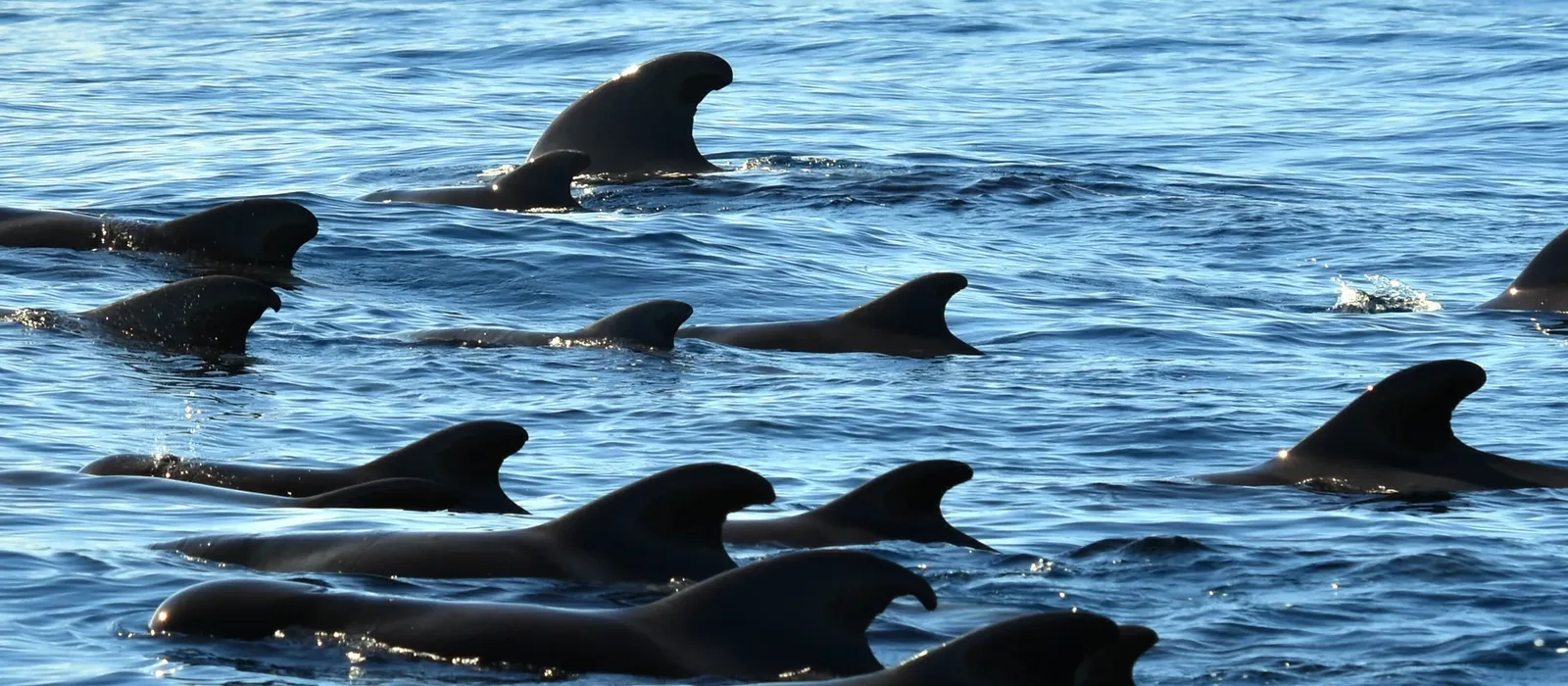
Without plankton, the sea we know could not exist. The dolphins, the pilot whales and the turtles we see on our outings depend, in the end, on this invisible base. All the living sea rests upon it.
The oxygen we breathe
Plant plankton does more than feed the ocean. As it captures sunlight it produces oxygen, and a good part of the air we breathe comes from it.
This links the sea to our daily lives in a surprising way. Every time we breathe, part of that air comes from these tiny algae floating in the water.
That is why caring for the sea is not only about protecting the large, eye-catching animals. It is also about protecting the smallest, what cannot be seen but sustains the whole life of the ocean. Sailing, in silence and without leaving a trace, is a way of respecting that tiny, essential world. When we look at the sea from the deck, it is easy to think only of the dolphins or the turtles, but beneath the surface this invisible life beats away, sustaining everything, and it too deserves our care.